

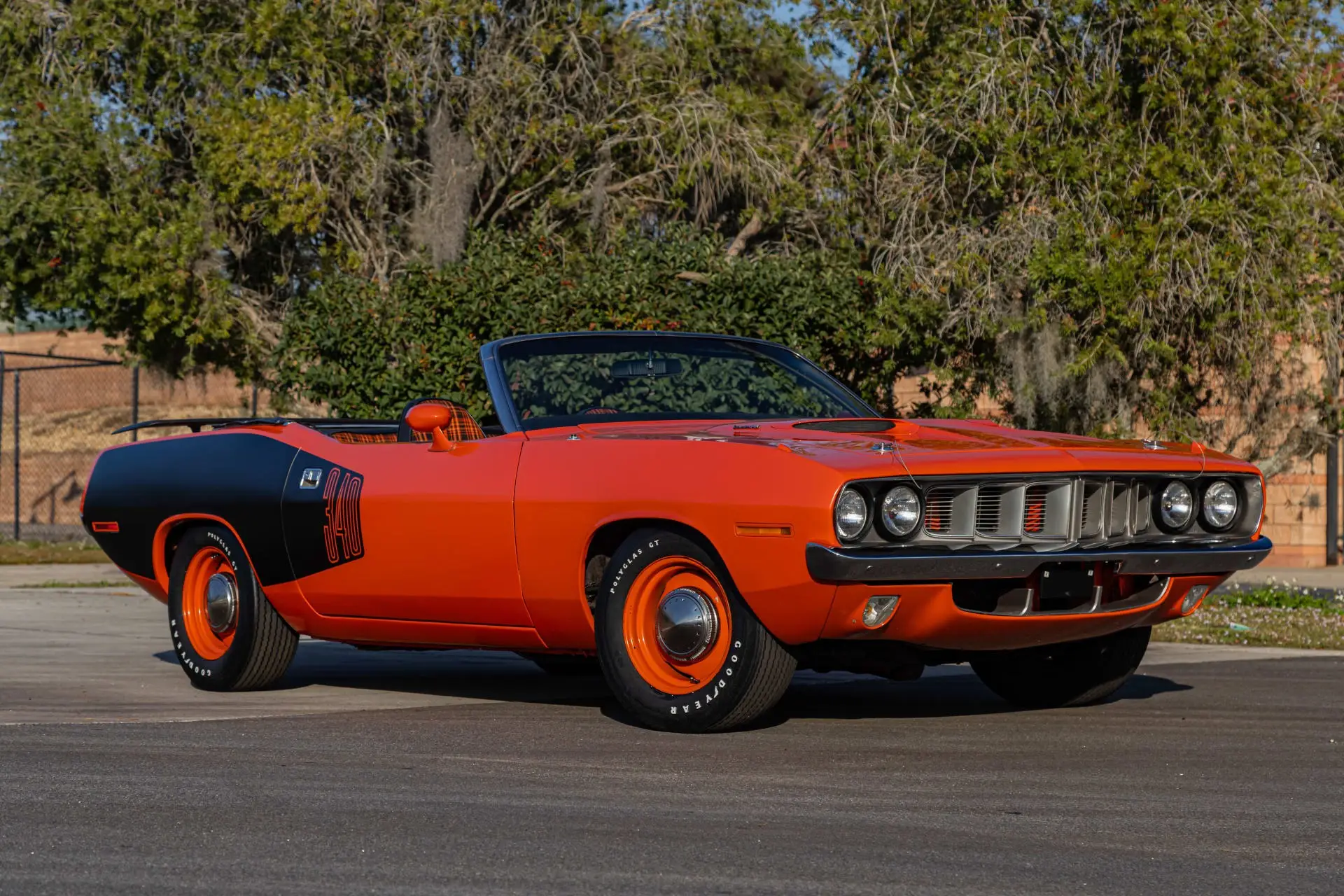
In the world of classic American muscle cars, some vehicles are merely rare and then there are unicorns. These are cars so scarce, so historically significant, and so wildly sought after that their mere existence feels almost mythical. For Mopar (Chrysler, Dodge, Plymouth) fans, one such unicorn has been the object of obsession for decades: the 1971 Plymouth HEMI ’Cuda Convertible.
What Makes a Unicorn Car?
When collectors talk about a “unicorn,” they’re referring to more than a rare vehicle. A true unicorn is a car that ticks all the boxes:
- Extreme scarcity (only a handful ever produced)
- Performance pedigree
- Historical significance
- Desirability that spans generations
For Mopar fans, few cars check all those boxes like the HEMI ’Cuda Convertible.
The Story Behind the Legend
Back in the early 1970s, muscle cars were king big engines, raw performance, and bold styling defined an era. Plymouth’s Barracuda was one of the icons of the time, but the convertible version of the HEMI-powered ’Cuda was nearly unheard of. In an era where emissions rules and insurance costs were already squeezing high-performance cars out of existence, only a tiny number of HEMI ’Cuda convertibles ever left the factory. Estimates of these rare builds range into the single digits or low double digits, depending on the model year and spec.
Those that were built blended the legendary 426 HEMI V8 engine with open-top excitement an almost contradictory mix in a period when performance was under siege. Today, that contradiction is part of the mystique.
Why Collectors Go Crazy for Them
Finding one of these HEMI ’Cuda convertibles or even verifying its existence has been the holy grail for collectors for years. They aren’t just valuable because they’re rare; they’re valuable because they represent the peak of what American muscle once was. Production was so limited that many enthusiasts grew up hearing about these cars without ever seeing one in person.
One example once displayed at Mecum Auctions drew massive attention simply because convertibles with HEMI engines are almost impossible to find. That same car’s appeal is tied not only to its performance specs but to the stories and mythology that have grown up around it through the decades.
How They Compare to Other Unicorns
While the 1971 HEMI ’Cuda Convertible often tops the Mopar unicorn charts, the Mopar world has other legendary rarities that also get collectors talking. Cars like ultra-low-production HEMI-powered GTX convertibles and rare four-door HEMI Dodge models are occasionally uncovered, sometimes languishing in barns or auctions before they finally surface in the public eye.
But even among those oddballs, the HEMI ’Cuda convertible stands apart not just for performance, but because it represents a moment in time when Mopar engineers and enthusiasts still believed anything was possible, even as the muscle car era was winding down.
Modern Appetite for Legendary Muscle
Today’s classic car market reflects an appetite for nostalgia and authenticity. Cars that were once just driven and enjoyed have become prized investments, and the rarest of the rare command staggering prices when they finally do come to market sometimes millions of dollars.
But for many collectors, it’s not just about the money. Owning one of these unicorns is a statement a connection to a golden age of horsepower, style, and raw ambition that defined American automotive culture. For Mopar fans, that legacy still burns as fiercely as a HEMI engine at wide-open throttle.



 Antique Cars
 Classics
 Military Vehicles
 Modern Vehicles
 Muscle Cars
 Restomods and Customs