

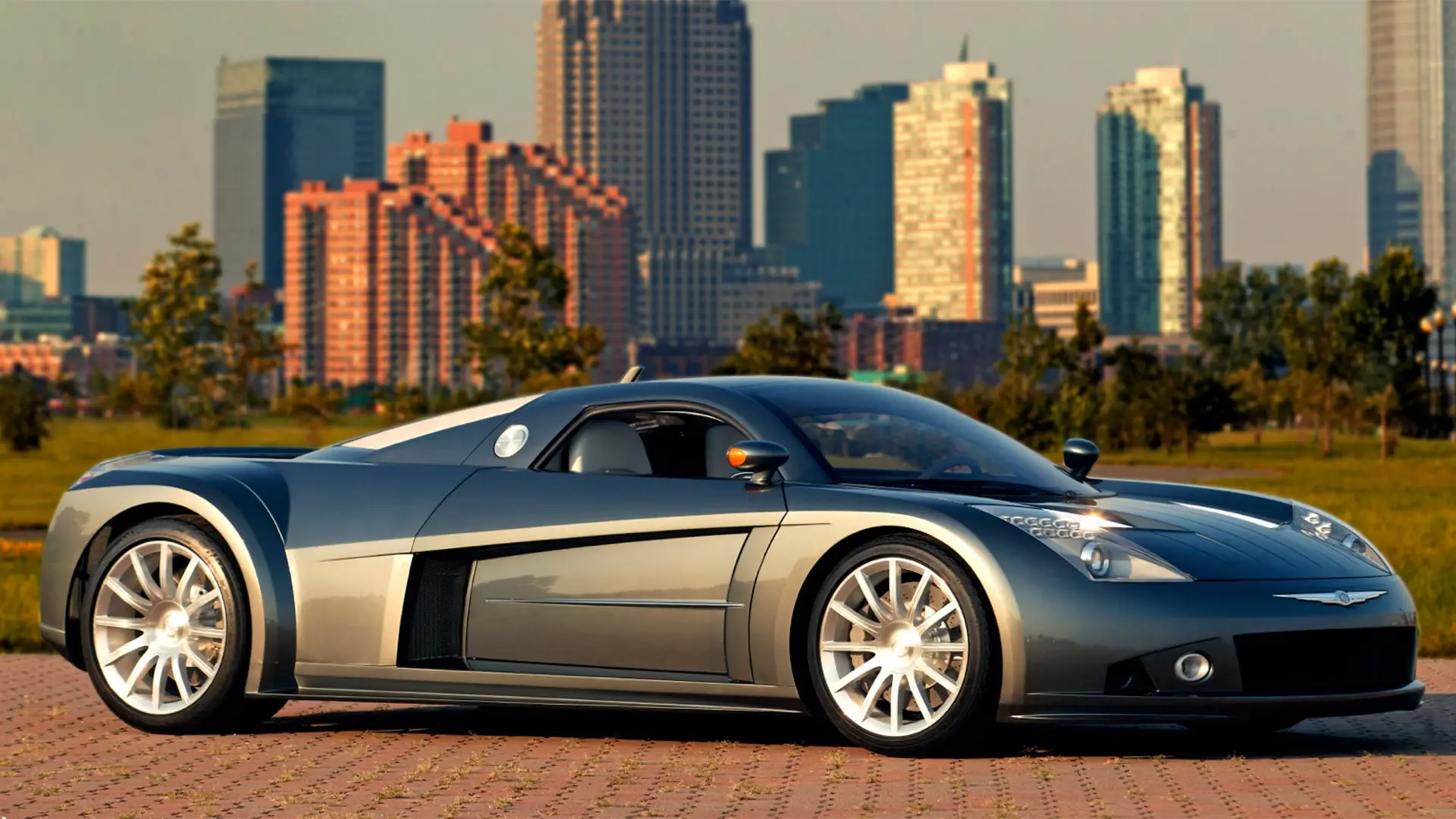
When you think of American supercars, names like Chevrolet Corvette and Ford GT usually come to mind. But there was a time in the late 20th century when Chrysler toyed with the idea of making one of its own a machine meant to compete with the world’s best and redefine what American performance could be.
This ambitious project, though ultimately unrealized, still captures the imagination of gearheads and Mopar enthusiasts decades later.
The Dream: A True Supercar With American Roots
Chrysler’s vision wasn’t modest. While most of the muscle car world was focused on brash V8s and quarter-mile domination, Chrysler designers and engineers began dreaming of something more refined, more exotic, and more technologically advanced a car that could sit alongside European supercars and still wear the American badge with pride.
At its core, the idea was simple but audacious: combine cutting-edge engineering with world-class performance, all while staying true to Chrysler’s identity.
A High-Performance Heart
The heart of this supercar project was planned to be a lightweight, high-revving engine a departure from the big, torquey pushrod engines that had defined much of American performance. Instead, Chrysler envisioned an engine with state-of-the-art engineering: advanced cylinder heads, aggressive airflow, and the kind of power delivery that would make it competitive with European rivals.
This powerplant wasn’t just about peak horsepower numbers. It was about balance, response, and precision things you wouldn’t necessarily associate with Detroit iron at the time.
Engineering That Went Beyond Muscle Car Norms
Where this project really turned heads was in its engineering philosophy. Rather than simply dropping a massive V8 into an existing platform and calling it a day (a method America had perfected in the 1960s and ’70s), Chrysler’s concept cars of this era featured:
- Lightweight architectures emphasizing agility over brute mass
- Balanced chassis dynamics tuned to handle as well as they pulled
- Aerodynamic bodywork designed for stability at speed, not just style
- Modern suspension systems prepared to take on tight tracks and back roads alike
In other words, this wasn’t just a faster muscle car it was a serious driver’s machine.
Why It Didn’t Reach Production
Ambition alone isn’t enough to bring a supercar to market and that’s where the project ran into trouble.
Throughout the late 1980s and early 1990s, Chrysler was navigating turbulent business waters. Economic pressures, shifting market trends, and internal restructuring took priority. Supercars are expensive, high-risk bets — and for a company trying to stabilize its core lineup, that wasn’t a bet it could comfortably make.
By the time Chrysler’s leadership could have committed to full-scale development, the window had effectively closed. The project was shelved, and the resources were redirected to more immediately profitable programs.
The Legacy of What Might Have Been
Even though the supercar concept never hit roads, its influence didn’t completely disappear. Ideas from the project found their way into later performance efforts:
- A renewed focus on lightweight materials
- Interest in balanced chassis design
- Continued exploration of high-performance engines
And for fans and historians, the story remains a fascinating “what if” a reminder that American manufacturers once seriously considered building cars that could rival the best from Italy and Germany.
Today, as Dodge and other Stellantis brands push forward with multi-energy performance vehicles (combining electric innovation with classic performance chops), some of that earlier ambition feels eerily relevant. The spirit of that unrealized Chrysler supercar lives on in every high-performance concept and every bold engineering bet.
End of an Era or Just the Beginning?
Chrysler’s supercar never made it into production, but it left a legacy of imagination and possibility. For a brand known for bold choices from HEMI engines to modern muscle reinventions this chapter is proof that sometimes the greatest performance cars aren’t just about horsepower they’re about daring to dream beyond the expected.
Who knows? With today’s technology and appetite for innovation, maybe one day Chrysler or another American brand will finally build that ultimate supercar America has always talked about.


 Antique Cars
 Classics
 Military Vehicles
 Modern Vehicles
 Muscle Cars
 Restomods and Customs